100% Acrylic Paint and Fall Temperature Swings in Colorado Springs
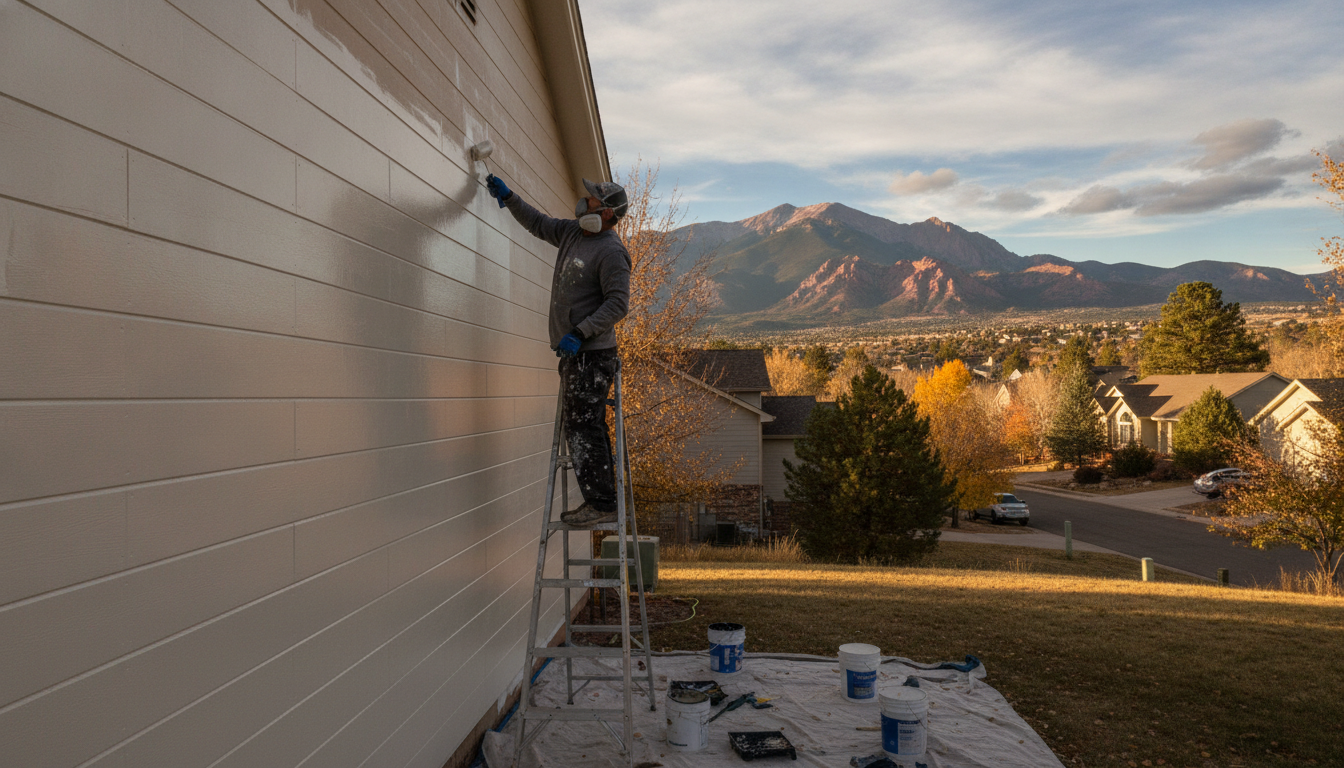
Why 100% acrylic coatings matter for exterior painting in Colorado Springs, especially as fall brings 30-40 degree daily swings that stress paint film.
Fall in Colorado Springs is a strange season to paint. Afternoons can sit in the 60s while the overnight low drops into the 20s or 30s. That swing of 30 to 40 degrees in a single day is normal here, and it is exactly the kind of stress that separates a coating that holds up from one that cracks at the seams within a year or two. If you are weighing exterior painting in Colorado Springs this fall, the product class matters as much as the color chip you picked.
What "100% Acrylic" Actually Means
Paint is a resin carrying pigment. The resin is what determines whether the dry film can flex, and 100% acrylic resin systems are built for exactly that kind of movement. As temperatures rise and fall, siding and trim expand and contract, sometimes by a small fraction of an inch, but that is enough to crack a brittle film right along a board seam, a nail head, or the joint where trim meets siding. Those joints are the openings that are supposed to keep water out. A coating that cracks there is not just a cosmetic problem. It is a water problem waiting to happen.
Vinyl-acrylic blends cost less to produce and can look identical on the shelf, but they do not hold that flexibility as long. On a south or west-facing wall in Colorado Springs, where UV load is significantly higher than at sea level because of our elevation above 6,000 feet, a vinyl-acrylic coating tends to chalk and fade years sooner than a 100% acrylic film. That is not a brand claim. It is how the chemistry behaves under this much sun and this much thermal cycling.
Why the Daily Swing Matters More Than the Season
Most exterior coatings need the surface temperature above roughly 50 degrees for the entire cure, not just at the moment of application. A warm October afternoon can feel like perfect painting weather, but if the overnight low drops to freezing before the film has fully cured, that cure gets interrupted. The result can be a coating that looks fine going on and fails early: poor adhesion, chalking ahead of schedule, or a surface that never quite hardens the way it should. This is one of the reasons exterior work in this region runs roughly April through October, with late spring and early fall as the sweet spot before the swings get too extreme.
Specification Should Change by Elevation, Not Just by House
South and west walls do far more work than north and east walls on the same house. They take the direct UV load and the widest temperature swings through the day. That is why coating specification is not a single decision for the whole exterior. It is a series of decisions made wall by wall. On stucco, block or concrete, a masonry or elastomeric coating can bridge hairline cracking and shed water where the wall calls for it, but a high-build coating also slows how a wall dries outward. On a wall that already holds moisture, that can make things worse rather than better. That is a judgment made on site, looking at the actual wall, not a default applied to every stucco house in a subdivision.
The Sequence Still Comes First
No coating, however good, fixes a wall that was not prepped right. The house gets washed down before anything else happens, because chalked paint, dust and mildew will not let a new coat bond. Failed material gets repaired before it gets covered, whether that is split trim, soft siding or cracked stucco. Then the openings get sealed: nail heads, board seams, joints around penetrations. That third step is the one most often skipped, and it is the one that keeps a cosmetic job from turning into a rot problem down the line. Only after that does the spot-priming and coating happen, specified per surface and per elevation.
Serving Colorado Springs and the Surrounding Area
Happy Painting Inc. has been doing this work for 13 years, and owner Josh Welp brings over 25 years in the painting trade, including years on the supply side specifying coatings for exactly these conditions. That background is why the conversation about paint starts with the surface and the exposure, not the color chart. We work on homes, businesses and apartment properties in Colorado Springs and roughly 50 miles around it, including Monument, Black Forest, Falcon, Fountain, Woodland Park and Castle Rock, with lower and warmer Pueblo holding its exterior season a bit longer than the rest of the region.
If your siding or trim is chalking, cracking at the seams, or just due for attention before winter sets in, a Happy Painting associate can take a look and tell you honestly what the wall needs. Estimates are free and carry no obligation. Give us a call at (719) 373-5550 to get started.
Frequently Asked Questions
Can I paint outside once it starts getting cold at night?
It depends on the overnight low, not just the daytime high. Most exterior coatings need the surface above roughly 50 degrees for the entire cure. A mild afternoon followed by a freezing night can ruin a coat that looked fine going on, which is why timing matters as much as the weather that day.
Does 100% acrylic cost more than other exterior paint?
Product class is one factor among several that affect a job, and Happy Painting does not quote pricing without seeing the property, since prep is usually most of the cost. What we can say is that 100% acrylic is chosen for siding and trim because it stays flexible through our temperature swings and holds color longer against high-altitude UV, which matters more here than at lower elevations.
Will a new coat of paint fix cracking at my trim joints?
Not on its own. If the cracking is from a brittle film that cannot flex with the substrate, repainting with the same type of coating will crack again in the same places. The joints usually need to be resealed and the right product class applied before the new coat goes on, which is why prep and specification matter as much as the paint itself.