Apartment Complex Painting Cost Factors in Colorado Springs
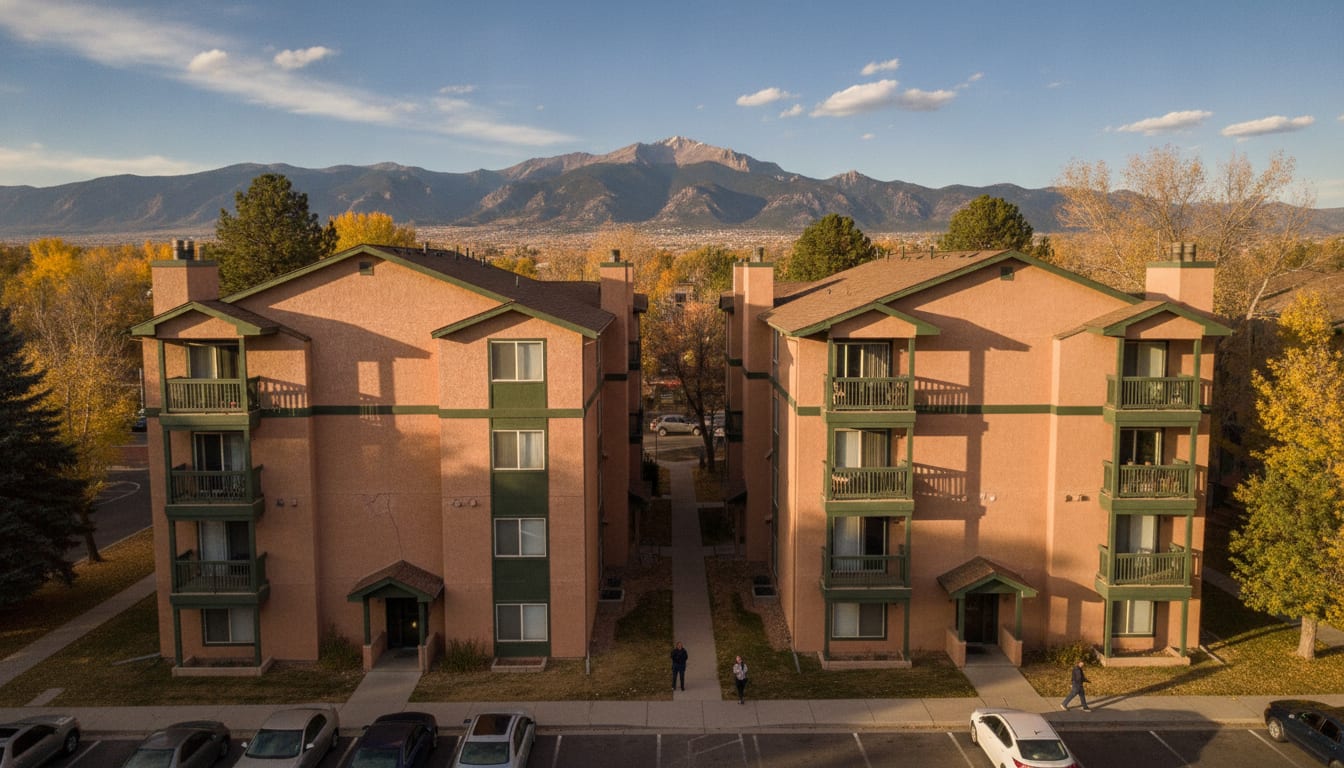
What property managers should know about apartment complex painting cost factors in Colorado Springs before budgeting next year's repaint.
Fall is when a lot of property managers and HOA boards start thinking about next year's exterior repaint. The budget has to go to ownership or the board before the freeze sets in, and that means getting a realistic scope now rather than guessing at a number and hoping it holds. If you're responsible for an apartment complex, condo association or HOA property in the Colorado Springs area, here's what actually drives the scope — and the cost factors — once someone gets a ladder up against the building.
It Starts With a Survey, Not a Square-Foot Number
A multifamily exterior isn't one job, it's several buildings with different exposure, different ages, and usually different problems on each elevation. Before anyone can give you a real scope, someone needs to walk the property and look at every building, not just the one closest to the leasing office. That survey is what turns into your line items: how much surface needs washing, how much substrate needs repair, how much trim is split, and where the stucco has actually lost its bond versus where it's just cosmetic cracking.
At 6,000-plus feet, south and west-facing walls take a UV load that north and east walls never see. On a property with a dozen buildings, that means some elevations are due for a full repaint while others on the same building are still holding color fine. A scope that treats every wall the same is either overspending on the walls that don't need it or underspending on the ones that do.
The Repairs Are the Scope, Not an Add-On
The most common way a multifamily repaint goes over budget is repairs showing up mid-project as change orders. Stucco cracks, soft siding, split fascia and failed caulk joints should get written into the original scope, building by building, during the same survey that prices the paint. That's especially true with expansive clay soils across El Paso and Douglas County, which drive a lot of the stucco cracking and nail pops property managers see repeat year after year — the kind of crack that comes back isn't a paint problem, it's a movement problem, and it needs to be identified at the scoping stage, not discovered after the crew is already on scaffolding.
Composite hardboard siding is its own line item on properties built from the late 1970s through the 1990s. The classic failure is the bottom edge wicking up water and the board swelling and separating in layers — usually on one or two elevations rather than the whole property. Catching that at survey stage, building by building, means it's priced once instead of arriving as a surprise later.
Phasing: How a Capital Repaint Actually Gets Scheduled
Nobody repaints a 120-unit property in one pass. A realistic schedule moves building by building, which lets residents get notice, lets parking and move-in/move-out logistics stay manageable, and lets the budget get spread if that's how ownership wants to handle it. Phasing also means the crew can work around leasing schedules and common-area events instead of shutting down the whole property at once.
Timing and the Climate Constraint
Exterior coatings in this region need surface temperatures above roughly 50 degrees for the entire cure, not just at application. Colorado Springs routinely drops 30 to 40 degrees after dark, so late-season work has a real cutoff — a warm afternoon followed by a freezing night can ruin a coat that looked fine at five o'clock. That's why boards and managers budgeting in the fall are planning for a late spring through early fall execution window, not a winter one. Properties in Monument, the Tri-Lakes and Black Forest sit higher and see that window close earlier; Pueblo, lower and warmer, holds its season longer.
What This Means for Your Budget Conversation
When you're putting a number in front of a board or ownership, the honest answer is that square footage alone doesn't tell you what a property needs — prep and repair scope does. A property with sound stucco and tight trim costs less to scope than one with hardboard siding failing on two elevations and cracking that's been painted over twice already. That's not a dodge, it's how the job actually breaks down.
Why This Matters for Property Managers Specifically
Multifamily and HOA work is a market Happy Painting is actively building out further, and it's handled as a phased capital improvement project — building by building, with stucco, trim and siding repairs written into the same scope so what the survey finds becomes a line item instead of a change order down the road. A multifamily contract of this kind has run as large as $145,000 across two years. If you're a property manager or board member scoping next year's repaint, get in touch and ask that Josh call you personally — the on-site estimate is free, and the survey is where the real budget conversation starts.
Frequently Asked Questions
How far in advance should we schedule a survey for next year's repaint?
Fall and early winter is a good time to get a survey done, since exterior work itself won't start until the weather allows, generally late spring through early fall. Getting the survey and written scope done now gives your board or ownership group a real number to budget against instead of a rough guess.
Will every building on our property need the same amount of work?
Usually not. South and west-facing elevations typically take more UV exposure and fail sooner than north and east walls, and older buildings on the property may have different substrate issues than newer ones. A proper survey breaks the scope out by building and elevation rather than averaging the whole property.
Can repairs be bundled into the same contract as the painting?
Yes — stucco, siding, trim and drywall repairs can be scoped into the same project as the paint, building by building, so they're priced up front rather than turning into change orders once work is underway.