Commercial Interior Painting Around Business Hours in Colorado Springs
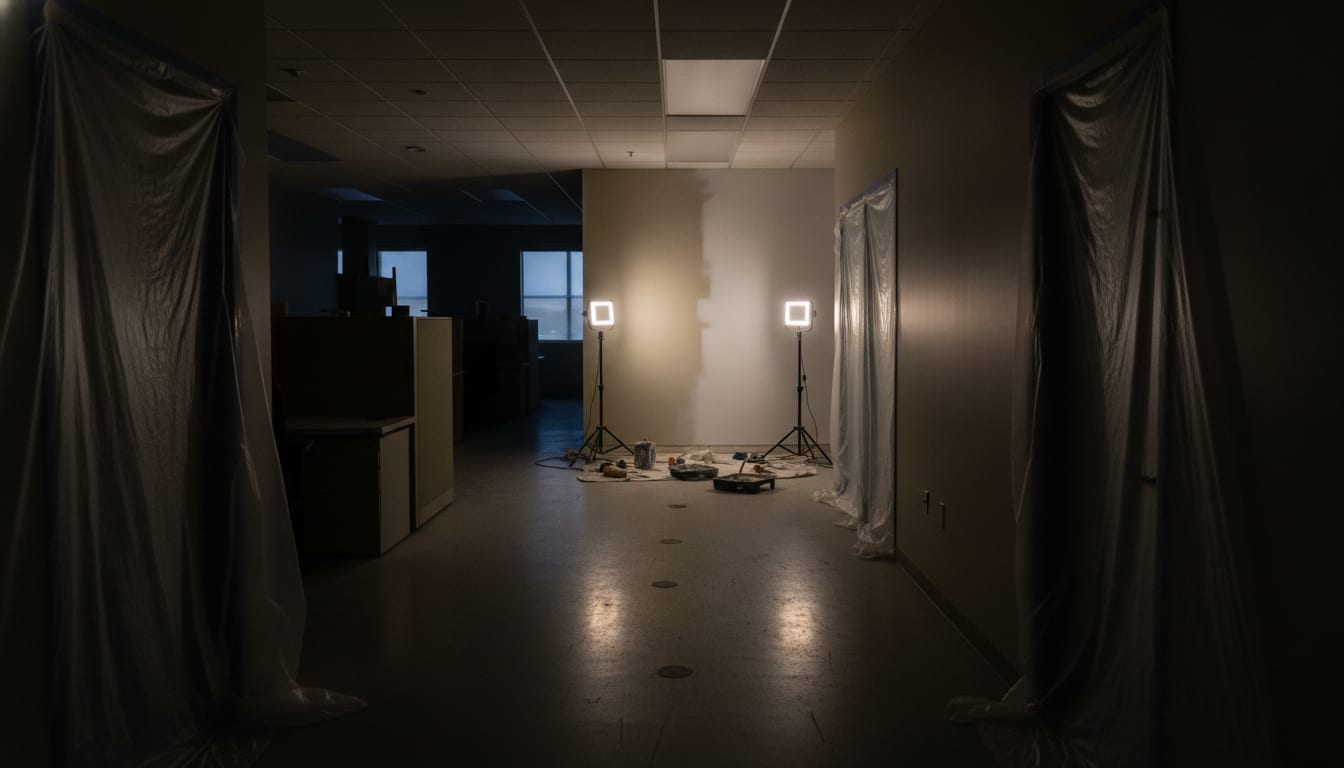
Evening, weekend and phased interior painting keeps Colorado Springs businesses open through winter. Learn how commercial scheduling actually works.
Winter is when a lot of commercial interior repaints happen in Colorado Springs, and that is not a coincidence. Exterior work shuts down once nighttime temperatures drop below the range most coatings need for a full cure, which pushes crews and schedules indoors. For a business owner or property manager, that means more availability for interior work between roughly November and March, but it also means the job has to happen without shutting the doors.
Why Winter Is Interior Season Here
At 6,000 feet and above, Colorado Springs gets a UV load that is hard on exterior coatings but has nothing to do with interior walls, ceilings and trim. Interior painting runs year-round regardless of elevation or temperature swings, which is exactly why winter becomes the busy season for offices, retail spaces, restaurants and light industrial interiors. The outdoor work has paused for the year; the indoor work has not.
Scheduling Around a Business, Not Around a Crew
A retail store, a restaurant kitchen or a medical office cannot simply close for a week so the walls can be repainted. That is where evening, weekend and phased scheduling comes in. Evening work lets painting happen after closing and dry overnight before the doors open again. Weekend work uses the two days a lot of businesses see lower foot traffic anyway. Phased scheduling breaks a larger space into sections — one wing, one floor, one suite at a time — so the rest of the business keeps operating while one area is masked off, prepped and coated.
None of that works without the same prep that any interior job depends on: filling and sanding nail holes, dents and drywall seams flat, caulking the gaps between trim and wall, spot-priming repairs and bare substrate, deglossing existing enamel on doors and trim before a new coat goes on, and masking and protecting floors, fixtures and worktops. Furniture gets moved and covered rather than worked around. Skipping any of that step to save time is how a rushed repaint looks tired again within a year.
What Phased Really Looks Like
For a multi-room office or a retail space with several departments, phasing usually means working one zone to completion — prep, prime, paint, cleanup — before moving to the next, rather than prepping the whole space and painting it all at once. That keeps dust, fumes and ladders out of areas that are still open for business. For a restaurant, that might mean dining room one night and kitchen prep areas another, timed around health inspections and supply deliveries rather than just convenience.
Coatings That Hold Up Indoors
Interior trim, doors and cabinetry do best with a waterborne enamel. It cures hard without the strong smell or the yellowing you get from an old oil-based enamel, and in a commercial setting where a space reopens quickly, that matters. It is usable within a day and reaches full hardness over a couple of weeks, which is worth knowing if high-traffic doors or counters get used again right away. Walls and ceilings call for different coatings depending on the surface and how much the space gets scrubbed or bumped, and primer gets chosen for the specific problem underneath — a bonding primer, a stain-blocking primer or a sealing primer, not a default step. That specification should be set room by room and surface by surface, not as one blanket choice for the whole building.
Multifamily and HOA Interiors Count Too
Common areas, leasing offices, clubhouses and hallways in apartment communities and HOA properties face the same scheduling pressure as retail and office space, just with residents instead of customers. Phased, after-hours work keeps those spaces usable while repairs and repainting move through a building. Property managers and HOA boards weighing a winter interior repaint are exactly the kind of project this approach is built for.
Getting a Schedule That Actually Works
Every business runs on different hours, so there is no single schedule that fits a restaurant, a medical office and a retail storefront equally well. A Happy Painting associate takes a look at the space in person, at no cost, and works out which combination of evenings, weekends and phasing fits the way the business actually operates — not a generic template. Estimates are free and carry no obligation.
Frequently Asked Questions
Can commercial interior painting really be done without closing for a day?
In most cases, yes, through a combination of evening work, weekend work and phasing the space into sections so only part of it is out of use at any time. The right mix depends on the layout and the hours the business actually keeps.
Does winter interior painting take longer because of the cold?
Interior painting is not limited by outdoor temperature the way exterior work is, since the space is heated and controlled. Scheduling is driven more by how the phasing is broken up and how much prep the walls and trim need than by the season itself.
What paint is used for high-traffic commercial trim and doors?
Waterborne enamels are the usual choice for interior trim, doors and cabinetry. They cure hard without the odor or yellowing of an older oil enamel, and they are usable within a day, which matters when a space needs to reopen quickly.