Elastomeric Coating on Stucco: Pros and Cons in Colorado Springs
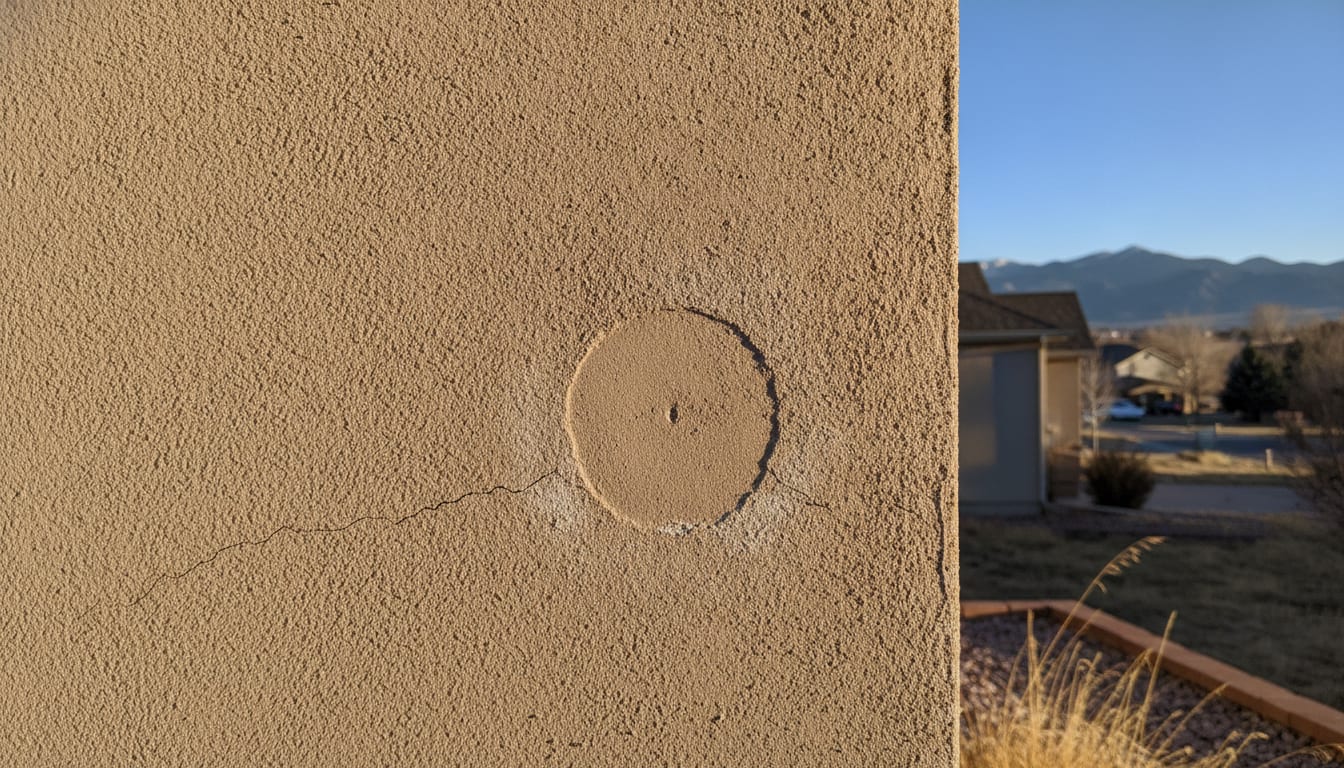
Elastomeric coating on stucco pros and cons for Colorado Springs homes — when bridging cracks helps, and when it traps water in a wall that's already wet.
Elastomeric coating comes up in almost every stucco conversation we have, usually framed as a fix for everything. It isn't. It's a tool that's right for some walls and wrong for others, and the difference matters more in Colorado Springs than in most places, because our walls go through a lot: 6,000-plus feet of UV load, a 30-to-40 degree swing between afternoon and overnight, and clay soils across El Paso and Douglas County that keep the stucco moving long after it's cured.
What an elastomeric coating actually does
Unlike standard exterior paint, elastomeric coating goes on thick — several times the dry film thickness of a regular acrylic — and it stays flexible once it cures. That flexibility lets it stretch across hairline cracking without splitting, which is exactly the problem on a lot of stucco around here. Expansive soils shrink and swell with moisture, the stucco moves with the ground underneath it, and fine crazing shows up on walls that are otherwise sound. A good elastomeric film bridges that crazing and sheds water off the surface instead of letting it soak in.
Where it helps
On a wall with cosmetic hairline cracking and no deeper problem, an elastomeric coating is a legitimate upgrade over standard masonry paint. It resists hail abrasion better, holds up to the south and west sun that does most of the damage at altitude, and it can extend the interval between repaints. For a stucco subdivision built after 1990, where the stucco is sound but weathered and showing fine surface cracking, it's often the right call.
Where it backfires
Here's the part that doesn't get said enough. Stucco is a breathable material by design — it's meant to let moisture that gets into the wall find its way back out. An elastomeric coating is a high-build film, and a thick film slows that outward drying down, sometimes a lot. If the wall is already holding water — from a crack you can get a fingernail into, a flashing detail that's failed, or efflorescence staining that shows water is already moving through the assembly — coating over it with something that seals the surface can trap that moisture behind the film instead of solving the problem. The wall looks fixed for a season or two, then the trapped moisture shows up as bubbling, delamination, or stucco that sounds hollow when you tap it, usually worse than before.
That's also where the knuckle test matters. Traditional three-coat stucco and EIFS — synthetic stucco over a foam substrate — look nearly identical from the sidewalk but behave completely differently once water gets behind them. EIFS sounds hollow when you knock on it; traditional stucco sounds solid. Coating either one without knowing which you're dealing with, and without checking whether the wall is already wet, is how a cosmetic job turns into a bigger repair a year later.
The judgment call, made on site
This is why we don't default to elastomeric coating as a standard upgrade. It's specified wall by wall, sometimes elevation by elevation, based on what the cracking actually looks like, whether there's a hollow sound anywhere, and whether there's staining that points to water already in the assembly. A wall with hairline crazing and no moisture history is a good candidate. A wall with a crack you can fit a fingernail into, or a bulge, or efflorescence, needs the actual cause found and repaired first — the coating decision comes after that, not instead of it.
This is the same logic that runs through everything under a repaint around here, whether it's stucco, siding or drywall: the coating is the last step, not the first decision. We fold stucco repair, siding and trim repair, and drywall repair into the same scope as the paint job itself, because painting over a wall that hasn't been diagnosed properly just delays the real cost.
It applies to a single-family home in a stucco subdivision, a commercial building downtown, or a multifamily property doing a phased capital improvement repaint building by building — on multifamily work especially, getting the coating decision wrong across several buildings is expensive to undo. Whether you're in Colorado Springs proper, up in Monument or Black Forest, out in Falcon or Fountain, down in Pueblo, or anywhere in between, the same questions apply before anyone picks up a sprayer.
If you're not sure which situation your stucco is in, that's a reasonable thing to have looked at rather than guessed at. A Happy Painting associate will come out, look at the actual cracking and sounding, and walk you through what it calls for — the estimate is free and there's no obligation.
Frequently Asked Questions
Is elastomeric coating always better than regular paint on stucco?
No. It's better on a sound wall with hairline cracking that needs bridging. On a wall that's already holding moisture, its thick, low-permeability film can trap that moisture instead of letting it dry out, which makes things worse rather than better. The right call depends on the wall, not a blanket rule.
How do I know if my stucco is holding water?
A few signs point that way: a crack you can catch a fingernail in, a section that sounds hollow when tapped, a bulge in the surface, or white powdery staining called efflorescence. Fine hairline crazing by itself is normal and usually just needs a coating. Anything beyond that is worth having looked at before a decision gets made on coating.
Can you tell traditional stucco and EIFS apart before repairing a crack?
Yes, with a simple knuckle test — EIFS, which is synthetic stucco over a foam substrate, sounds hollow when you knock on it, while traditional three-coat stucco sounds solid. They look alike from a distance but repair completely differently, so knowing which one you have comes before deciding how to fix a crack.