Expansive Soils and Recurring Drywall Cracks in Colorado Springs
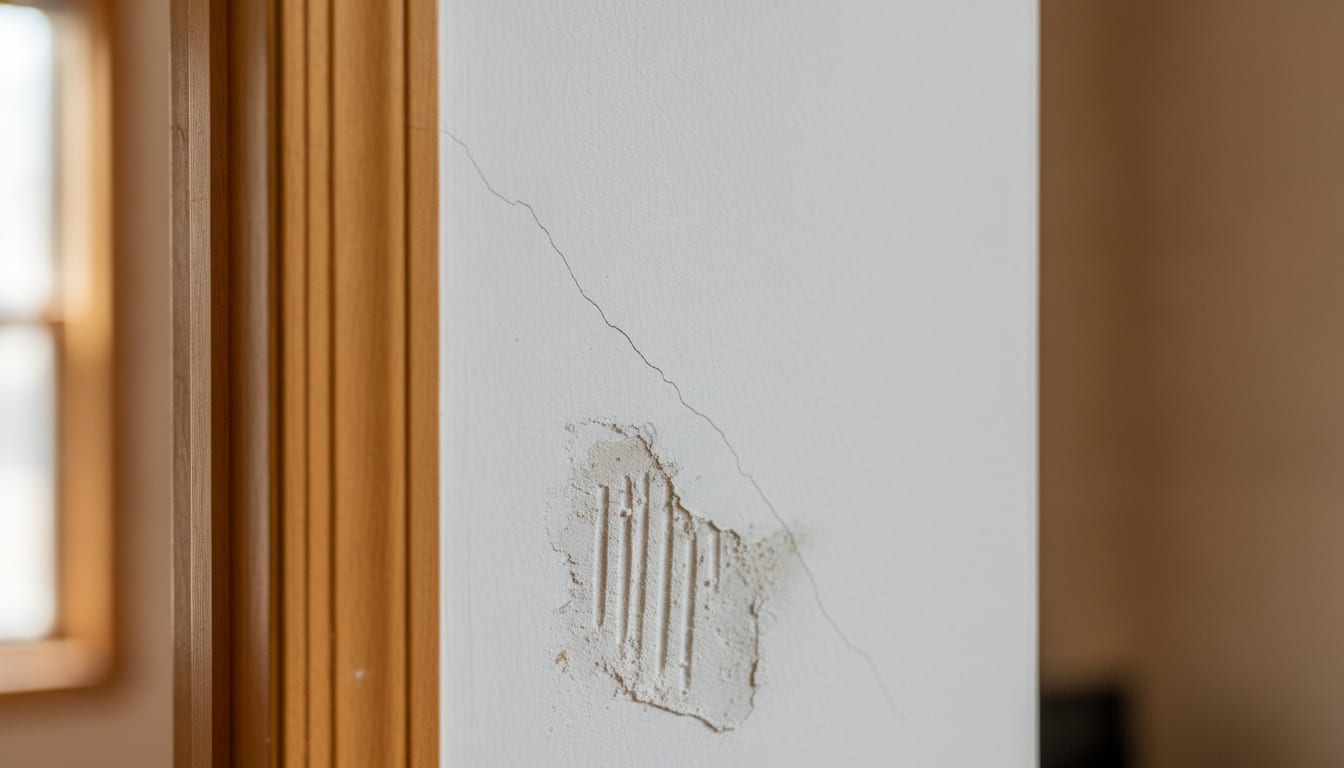
Why the same drywall crack keeps coming back in Colorado Springs homes, and how expansive clay soils and dry fall air drive movement cracks.
You patch the crack above the bedroom door in spring. By fall, it is back in exactly the same place. If this sounds familiar, you are not imagining it, and you are not doing a bad job with the joint compound. The crack is not a drywall problem. It is a movement problem, and movement needs a different kind of repair than a hole in the wall does.
Why the same crack keeps opening up
Drywall cracks in two basic ways. One kind happens once — a doorknob punches a hole, a moving box gouges a corner — and a standard fill, sand, prime and paint repair fixes it permanently. The other kind happens because the framing behind the drywall is actually moving, a little, over and over, and the crack is the drywall's way of showing you where that movement concentrates. Fill it and it will open again, usually in the same spot, because nothing about the repair addressed what is moving underneath it.
Around El Paso and Douglas County, the two biggest drivers of that movement are expansive clay soils and the region's very low humidity. Clay soils here swell when they pick up moisture — from snowmelt, from irrigation, from a wet spring — and shrink again as they dry out. That swelling and shrinking happens unevenly under a foundation, which flexes the structure above it just enough to stress drywall at its weakest points: over door and window headers, along seams where two sheets meet, and at inside corners.
Why fall is when it shows up
Fall adds a second mechanism on top of the soil movement. Colorado Springs air gets noticeably drier as the season turns, and wood framing responds to humidity the same way it responds to soil movement — it shrinks as it dries out. A stud or a header that absorbed some moisture over a humid summer gives it back in September and October, and that shrinkage pulls at the drywall fastened to it. Add the daily temperature swing of 30 to 40 degrees that is normal here in fall, and the framing is contracting and expanding on a near-daily cycle. That combination is why so many of these calls come in once the leaves turn, even though the underlying soil movement has been happening all year.
What a repair that actually holds looks like
A third round of spackle treats the symptom. A repair that holds is detailed to let the joint move without telegraphing a crack back through the paint film — that can mean a flexible joint treatment at the crack line rather than a rigid one, texture matched so the repair disappears rather than standing out as a patch, and the right primer to seal the repair before it is painted. None of that stops the framing from moving; the point is to stop the movement from showing.
This is the same logic that applies outside on stucco: hairline crazing is normal and takes a coating, but a crack you can get a fingernail into, or one that keeps returning, is telling you something about what is happening behind the surface, not just on it. Drywall and stucco crack for different reasons, but in both cases the repair has to match the cause, or you are just buying a few months before the next call.
Painting and repair in one scope
Happy Painting handles drywall repair, stucco repair, and siding and trim repair as part of the same scope as the painting itself — interior painting, exterior painting, commercial painting, and apartment and HOA exterior work across Colorado Springs and roughly fifty miles around it, including Monument, Castle Rock, Black Forest, Falcon, Fountain, Woodland Park and Pueblo. Josh Welp has over 25 years in the trade, including years on the supply side specifying coatings and repairs, and a Happy Painting associate takes a look at every job in person before anything is priced. Estimates are free and come with no obligation.
Frequently Asked Questions
Is a recurring drywall crack a sign of a foundation problem?
Not necessarily. Small, cyclical movement from expansive clay soils and seasonal humidity swings is common across this region and does not by itself mean a structural issue. If you are also seeing doors that stick, uneven floors, or cracks widening rather than just reopening, that is worth having someone qualified assess the structure itself, separate from the cosmetic repair.
Can I just keep filling the same crack myself?
You can, and many homeowners do for years, but it is a cosmetic fix on a repeating cycle rather than a repair. If the crack always comes back in the same spot, a repair detailed to allow for movement — rather than another coat of compound — is more likely to hold through the next dry season.
Does this happen more in some parts of Colorado Springs than others?
Expansive clay soils are widespread across El Paso and Douglas County, so it shows up in older and newer construction alike. Homes built directly on areas with heavier clay content tend to see it more, and it is common enough that it is one of the more frequent repair calls we get once fall sets in.