Hail Damage to Siding and Trim: Why It Shows Up This Fall
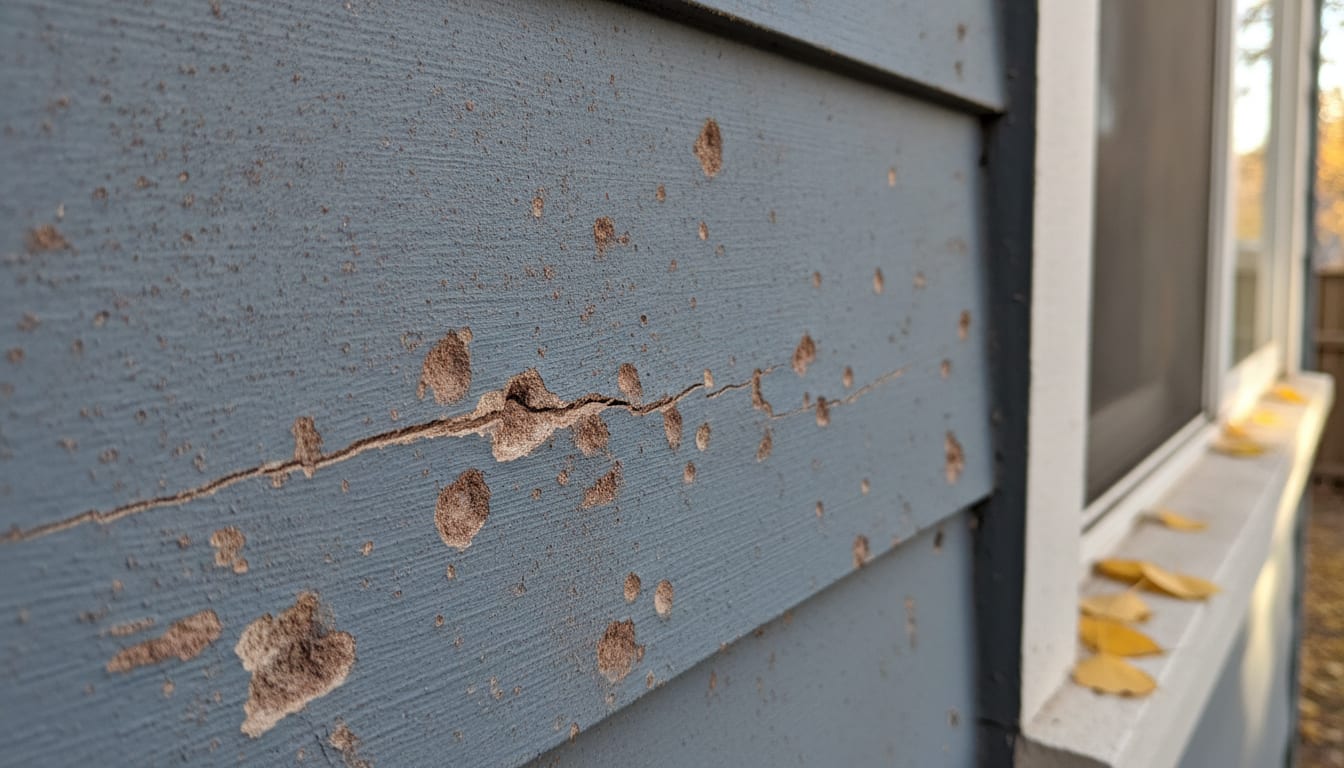
El Paso County hail damage often hides until fall. Here's what to look for on siding and trim before Colorado Springs' exterior painting season closes.
If your house took a hail hit this summer and the siding looked fine afterward, that is not always the end of the story. A lot of what hail does to siding and trim does not show right away. It shows up now, in fall, once the wood has had a few months to react.
Why Hail Damage Takes a Season to Show
Hail usually does not punch a hole you can see from the driveway. More often it bruises or cracks the surface of a board, compresses the paint film, or knocks a chip out of trim that is small enough to miss at a glance. Water finds that opening long before your eye does. Over a summer of afternoon thunderstorms, that small breach lets moisture into the wood or substrate underneath. By the time fall arrives and the air dries out, the damage has had all season to work: the wood has swollen and started to split, the paint has lifted at the edges of the impact, or a soft spot has formed that was not there in June.
El Paso County sits in one of the more hail-prone corridors in the country, so this is not a rare event here — it is closer to a seasonal certainty. Fall is simply when last season's hits stop hiding.
What to Look For Now
Walk the exterior, especially the side of the house that faces where storms typically track from. Look for small circular dents or cracks in siding and trim, paint that has a pock-marked or sandpaper texture where it used to be smooth, soft or spongy spots when you press on a board, and any spot where paint has started peeling in a small, isolated patch rather than across a whole wall. On composite hardboard siding — common on Colorado Springs homes built from the late 1970s through the 1990s — hail damage at a seam or edge is exactly the kind of breach that lets water start the swelling and delamination this siding type is known for.
On stucco, a hail strike can crack the finish coat without you noticing from the ground. Hairline crazing is normal and not a concern. A crack you can get a fingernail into is a different matter — that is a water path, and it is worth a look before winter moisture gets behind the coating.
Why This Matters Before Winter
Exterior coatings need surface temperatures above about 50°F for the entire cure, not just at application, and Colorado Springs routinely swings 30 to 40 degrees after dark. That window is closing for the year. If hail has opened up bare substrate or cracked trim, getting it sealed and coated before the season ends matters more than it would in June, because once temperatures drop, repairs and recoating have to wait for spring.
Paint Alone Will Not Fix a Failed Board
This is where a lot of repaint jobs go wrong. Coating over a board that has already started to swell or split buys you a season at best, and the problem comes right back — often worse, because now it is hidden under fresh paint. The honest answer, when hail has compromised a board or a section of trim, is that the damaged material needs to come out and be replaced before anything gets painted over it. That is true whether it is one board behind a downspout or a full elevation.
The same logic applies to stucco. A patch that sounds hollow when you tap it has lost its bond to the wall, and a face coating will not restore that. It needs to be cut out and patched properly, matched for texture and color, before it gets coated.
What a Proper Inspection Catches
A Happy Painting associate can walk the exterior with you and tell you which marks are cosmetic and which ones are a path for water. Because painting and the repair work underneath it — drywall, stucco, siding and trim — are handled under one scope rather than referred out, whatever a hail inspection finds becomes a line item in the estimate instead of a surprise halfway through the job.
This applies whether it is a single-family home in Colorado Springs, a rental between tenants, or a multifamily property working through a capital improvement repaint. For HOA boards and property managers, hail damage findings are exactly the kind of thing that belongs in the original scope, phased building by building, rather than showing up as a change order partway through.
Covering Colorado Springs and the Surrounding Area
Happy Painting serves Colorado Springs and roughly fifty miles around it, including Monument, Black Forest, Falcon, Fountain, Castle Rock, Woodland Park and Pueblo. Conditions vary by elevation — Tri-Lakes and Teller County run a shorter, cooler exterior season, while Pueblo stays warmer later into fall — so timing a hail repair depends on where the property sits.
Estimates are free and on site, with no obligation. If you suspect hail damage from this summer, it is worth having it looked at before the season closes for exterior work.
Frequently Asked Questions
How do I know if hail damage is cosmetic or structural?
Cosmetic damage is surface-level: small dents in paint film without a soft spot underneath. Structural damage means the board has started to swell, split or feel soft to the touch, or stucco sounds hollow when tapped. A Happy Painting associate can tell the difference on site, and the estimate for that look is free.
Can hail damage wait until spring to get fixed?
It depends on whether the breach is letting water in right now. A cracked or exposed spot sitting through a Colorado Springs winter has months to do damage before anyone notices, so having it looked at this fall, while exterior work is still possible, is the safer call.
Will my insurance cover hail damage to siding and trim?
That is a question for your insurance company and adjuster — we are not positioned to advise on a claim. What we can do is document the physical damage during an on-site estimate so you have a clear picture of what needs repair and what needs painting.