HOA Exterior Repaint Colorado Springs: A Board Planning Guide
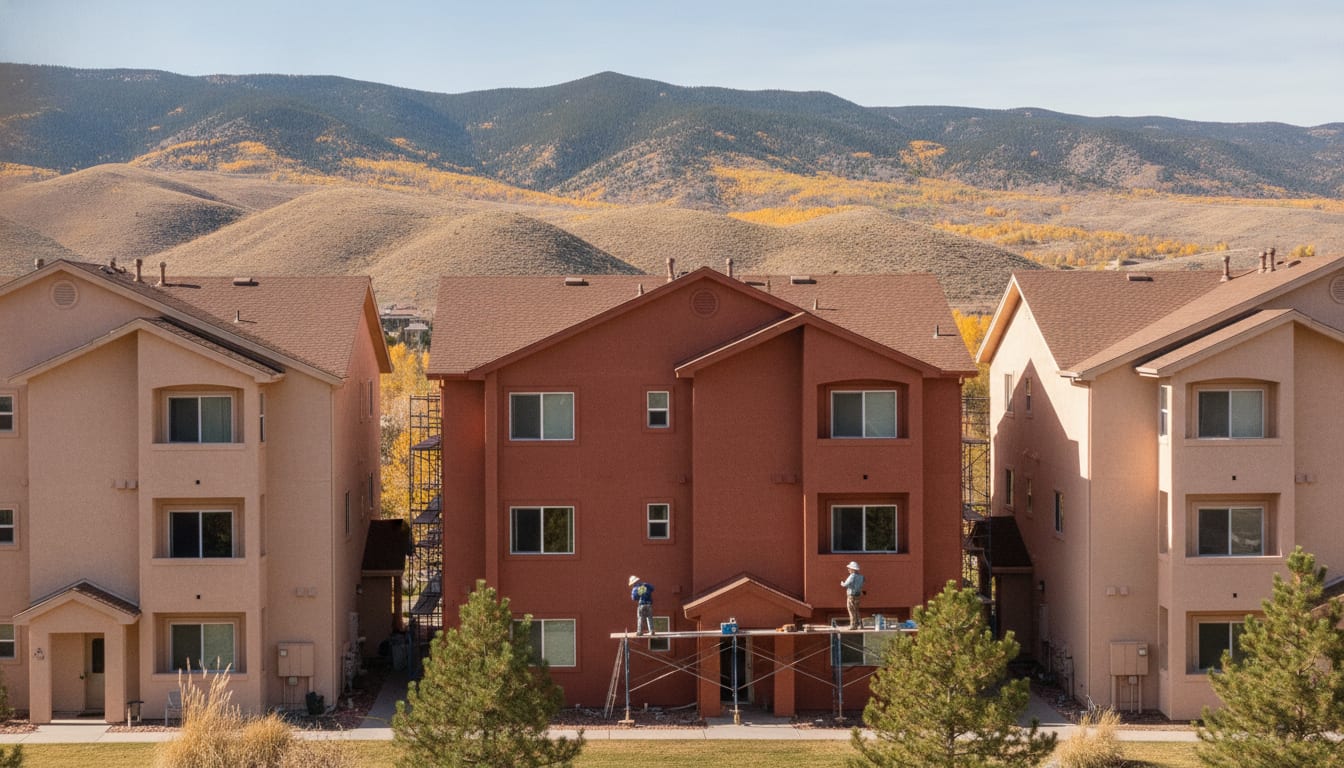
Planning an HOA exterior repaint in Colorado Springs? Learn how to scope by building, avoid change orders, and set next season's budget correctly.
Fall and winter are when most HOA boards in Colorado Springs set next season's exterior budget. It is also when the cheapest mistake gets made: pricing the repaint off square footage and a quick drive-by, then watching the number grow every time a board or property manager opens a wall during the work. A better approach is to scope the whole property building by building, before a single bid goes out, so the repairs are a line item in the original scope instead of a change order in July.
Why HOA Repaints Go Over Budget
Most cost overruns on an HOA exterior repaint Colorado Springs project trace back to the same root cause: the original scope only priced paint, not the substrate underneath it. On a property with a dozen buildings, that is a dozen chances for stucco cracks, soft siding, or rotten trim to show up mid-project. Each one that was not in the original scope becomes a conversation with the board about extra cost and extra time, usually right when the association least wants either.
The fix is straightforward on paper and takes real discipline in practice: survey every elevation of every building before pricing anything, and write what the survey finds into the scope as line items, not assumptions.
Scoping Building by Building
A property with multiple buildings rarely ages evenly. South and west-facing elevations take far more ultraviolet load at this elevation than north and east walls, so they chalk, fade, and crack first. A building that sits in afternoon sun on one side and shade on the other can need two different approaches on two sides of the same wall. Scoping building by building, and elevation by elevation within each building, is what catches that instead of averaging it away.
For stucco, the survey needs to separate hairline crazing, which is cosmetic and takes a coating, from a crack you can get a fingernail into, which is a water path. Horizontal cracks, bulges, or a hollow sound when tapped mean the stucco has lost its bond to the substrate behind it, and a face patch will not hold. Traditional three-coat stucco and EIFS, or synthetic stucco over foam, can look identical from the ground but repair completely differently — a knuckle test on each building tells them apart, since EIFS sounds hollow.
For siding, the survey should flag any board that is soft or swollen at the bottom edge. On Colorado Springs properties built from the late 1970s through the 1990s, composite hardboard siding fails in a specific pattern: the cut bottom edge wicks up water, the board swells, and the layers separate. It is usually one or two elevations on a handful of buildings, not the whole property, which is exactly the kind of detail a drive-by estimate misses and a building-by-building survey catches.
Writing Repairs Into the Scope, Not Around It
The reason repairs belong in the original scope rather than arriving as a change order is simple: once the board has approved a number, every dollar above it is a harder conversation, and it usually means a special assessment or a reserve fund draw nobody budgeted for. A repaint that treats drywall, stucco, and siding repair as part of the same scope as the paint gives the board one number to approve and one project to track, instead of a painting invoice followed by a string of repair invoices from whoever gets called next.
Scheduling a Multi-Building Property
A phased approach, moving building by building rather than trying to coat the whole property at once, keeps the work manageable for residents and lets the crew address what each building's survey actually found rather than a generic average. Exterior work in this region runs roughly April through October, since most exterior coatings need the surface above about 50 degrees for the entire cure, not just at application, and Colorado Springs routinely drops 30 to 40 degrees after sunset. That window is tighter in Monument, Black Forest, and the Tri-Lakes area, which sit higher and colder, and longer in Pueblo, which sits lower and holds its season further into fall.
What This Looks Like for Your Association
Happy Painting Inc. has run multifamily and HOA work as phased capital improvement projects, including a multifamily contract worth $145,000 across two years, with stucco, siding, and trim repairs written into the same scope as the painting. Josh Welp has over 25 years in the painting trade, including years on the supply side specifying coatings, and this is the market he is most interested in growing. If you are a board member or property manager planning next season's repaint, that is worth a conversation before the budget is finalized.
Frequently Asked Questions
When should an HOA board start planning an exterior repaint?
Fall and winter, while next season's budget is still being set, gives enough time for a proper building-by-building survey before bids go out. Exterior work itself runs roughly April through October in this climate, so planning ahead of that window avoids rushing the scope.
How do we avoid change orders once the repaint starts?
The repairs have to be identified and written into the scope before the work begins, not discovered after. A survey that checks stucco, siding, and trim on every building and every elevation, not just a sample, is what turns a hidden repair into a planned line item.
Does the whole property need the same paint and repair approach?
Usually not. South and west walls take more UV load and fail sooner than north and east walls, and one or two elevations on a handful of buildings often carry most of the siding or stucco damage. Specification by elevation, not a single average answer for the whole property, is what an honest scope looks like.