Scoping a Multifamily Exterior Repaint: A Fall Budget Guide
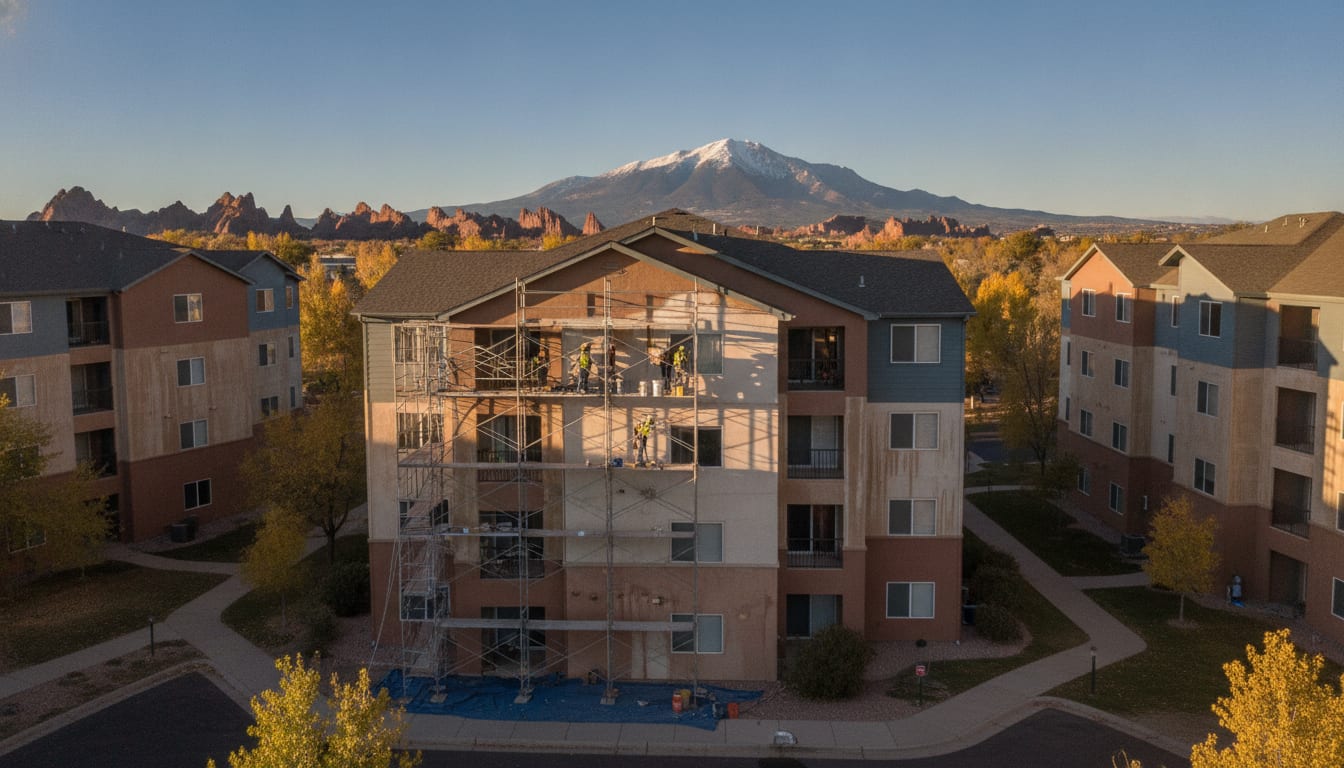
Planning next year's capital improvement budget? Here's how a multifamily exterior repaint gets scoped in Colorado Springs, phase by phase.
Fall is when most property managers and HOA boards sit down with next year's capital improvement budget. If an exterior repaint is on that list, the number you put in front of your board depends entirely on how the job gets scoped — and that's where a lot of multifamily repaints go wrong before the first ladder goes up.
Why Scoping Matters More Than the Paint
A single-family exterior repaint is relatively contained. An apartment community, condo association or HOA exterior repaint is a different animal — multiple buildings, different elevations facing different weather, and repairs that don't show up until someone gets close enough to touch the wall. Scope it like a single paint job and you'll find the real cost in change orders halfway through the project.
The better approach treats the whole thing as a phased capital improvement project. That means walking every building, documenting what each elevation actually needs, and writing the stucco, siding and trim repairs into the same scope as the painting — not as surprises that show up after the crew is already on site.
Phase by Building, Not by Guess
Multifamily properties rarely get repainted all at once, and they don't need to be. Phasing building by building lets a board budget predictably across a season, or across more than one, and lets residents keep living there without every unit dealing with scaffolding at the same time. It also means the survey findings on building four don't change the price on building one after the contract is signed.
What the Survey Should Actually Catch
A proper pre-repaint survey covers more than color and square footage. On stucco buildings, that means checking for the difference between hairline crazing that a coating will bridge and cracks wide enough to catch a fingernail — those are water paths, not cosmetic issues. It also means a knuckle test on a few spots, because traditional three-coat stucco and EIFS (synthetic stucco over foam) look nearly identical from the ground but repair completely differently. EIFS sounds hollow when you tap it.
On siding, the survey should flag composite hardboard specifically. Properties built from the late 1970s through the 1990s commonly used it, and the failure pattern is consistent: the cut bottom edge wicks up water, the board swells, and the layers start separating. It's usually isolated to one or two elevations — often the ones that take the most weather — rather than an entire building.
Trim and fascia get the same attention. Split boards, soft spots around downspouts, and caulking that's shrunk away from joints all belong in the same written scope, not a follow-up estimate once the painting crew finds them.
Why Elevation-by-Elevation Specification Matters
At 6,000-plus feet, south and west-facing walls take a UV load that north and east walls simply don't see. They chalk and fade years sooner. On a multifamily property with dozens of buildings, that means the coating specification should vary by elevation, not just by building — 100% acrylic on siding and trim holds up to the daily 30-to-40 degree temperature swing here, where a less flexible coating cracks right at the joints it's supposed to protect. On stucco, a masonry or elastomeric coating is useful where the wall actually calls for it, but it also slows the wall's ability to dry outward, so it's a judgment made on site, not a blanket default across the whole property.
Why This Belongs in Fall Planning
Exterior work in this climate runs roughly April through October — surfaces need to stay above about 50 degrees through the entire cure, not just at application, and our overnight drops rule out a lot of the calendar. That makes fall the right time to get the survey done, the scope written, and the budget approved so a project is ready to move when the season opens, rather than losing weeks waiting on an estimate in May.
One Scope, Not a Change Order Later
Happy Painting Inc. has run a multifamily contract worth $145,000 across two years, structured exactly this way — phased, with the repairs priced into the original scope. That's the difference between a predictable capital improvement budget and a board getting hit with extra line items partway through. If you manage a property, sit on an HOA board, or oversee a condo association anywhere in Colorado Springs and about 50 miles around it — including Monument, Castle Rock, Black Forest, Falcon, Fountain, Woodland Park or Pueblo — Josh will call you directly to talk through how the property would be surveyed and phased.
Frequently Asked Questions
How far in advance should we budget for a multifamily exterior repaint?
Fall is a good time to get a survey done and a written scope in hand, since exterior work is weather-dependent and busiest from late spring through early fall. Getting the number finalized ahead of that window means the project can start as soon as the season allows rather than waiting on an estimate once it's already busy.
Do repairs really need to be in the same scope as the painting?
Yes. A failed substrate — soft siding, a cracked stucco patch, rotted trim — is the most common reason a repaint doesn't last. Writing those repairs into the original scope means they're priced and planned up front instead of showing up as a change order once the crew finds them.
Can you phase the project so not all buildings are done at once?
Yes, that's the standard approach for apartment communities and HOA properties — building by building, so residents aren't all affected at the same time and the board can budget across more than one season if needed.