Signs Your Composite Hardboard Siding Is Failing at the Bottom
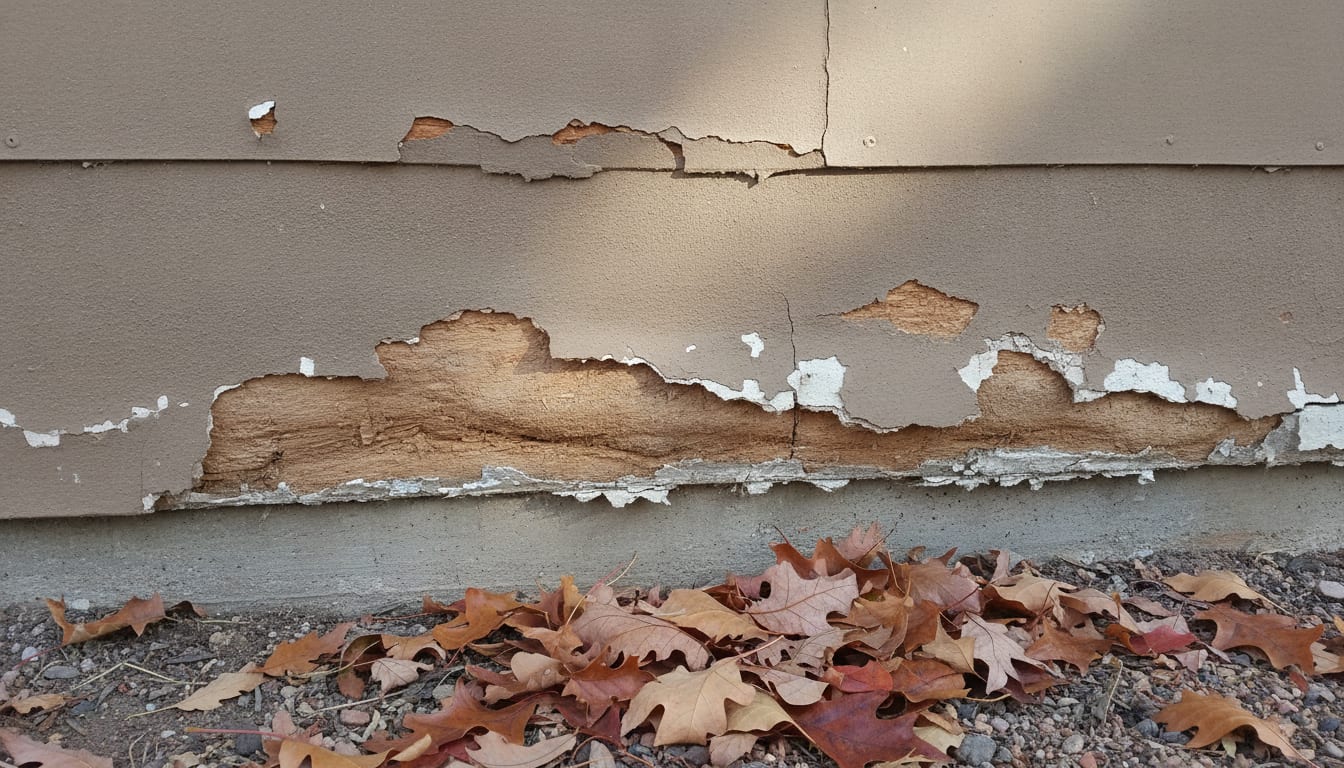
Swollen, soft siding at the bottom edge? Learn the signs of composite hardboard failure common on 1970s-90s Front Range homes before winter moisture worsens it.
If your house was built between the late 1970s and the 1990s anywhere along the Front Range, there's a good chance it has composite hardboard siding. It was a common choice in Colorado Springs, Monument, Fountain and Falcon subdivisions from that era. It held up fine for years — but there's a failure pattern specific to this material, and fall is the right time to catch it.
Why This Siding Fails at the Bottom Edge First
Composite hardboard is made of wood fibers pressed and bonded under heat. It handles a painted, sealed surface well. What it does not handle is a raw, cut edge sitting unprotected against moisture. The bottom edge of each board — especially where it overlaps the board below, or sits close to grade, a deck ledger or a downspout — is often where the factory coating stops and the cut edge is exposed.
That cut edge wicks up water like a sponge. Snowmelt, sprinkler overspray, and ice dams all find their way to it. Once moisture gets into the fiber, the board swells. Once it swells, the layers inside start to separate. You end up with a board that is structurally compromised long before it looks obviously wrong from the street.
What to Look For
Walk the lower few feet of your exterior walls, particularly on north and east elevations where things dry out slower, and anywhere near a downspout, a deck, or a sprinkler head that hits the wall. Signs worth taking seriously:
- Siding that feels soft or spongy when you press it with a thumb
- Visible swelling or a puffy look along the bottom edge of a board
- Peeling paint that keeps coming back in the exact same spot no matter how many times it's repainted
- Layers of the board visibly separating or flaking apart like wet cardboard
- A section that looks fine from a distance but feels different in texture up close
It's usually not the whole house. This pattern tends to show up on one or two elevations — often the side that gets the least sun and takes the longest to dry out, or wherever water concentrates from a roofline or grading issue.
Why Fall Is the Time to Deal With It
Once freezing temperatures set in, any moisture already inside that siding freezes and expands, which accelerates the damage. A board that's slightly swollen in October can be noticeably worse by March. Exterior painting season in Colorado Springs runs roughly April through October — exterior coatings need surface temperatures above about 50°F for the entire cure, and our overnight lows drop 30 to 40 degrees even on a warm fall day. That window is closing, which is exactly why fall is the right time to get failed boards assessed and either replaced or scheduled for spring, rather than ignoring it through a Colorado winter.
Why Paint Alone Won't Fix It
This is where a lot of repaint jobs go wrong. Painting over a board that's already swollen and delaminating does not stop the problem — it seals moisture in rather than out, and the failure continues underneath the new coat. If the bottom edge is soft enough to mark with a thumbnail, that board needs to be addressed before anything gets coated. The good news is that siding and trim repair is usually isolated to the affected sections, not a full re-side.
This is also where having one company handle both the repair and the paint matters. A lot of painting companies will coat over questionable siding and let someone else deal with what's underneath later. Having the repair and the coating in the same scope means the actual problem gets fixed once, with matched materials and a finish that's meant to last, instead of being painted over and revisited next season.
What a Site Visit Looks For
A Happy Painting associate checking hardboard siding will look at the bottom edge of boards near grade, downspouts and decks, press for soft spots, and check for delamination at joints and corners. From there, repair and painting scope can be written up together rather than arriving as a change order partway through the job. Estimates are free and on site, with no obligation.
Happy Painting serves Colorado Springs and roughly 50 miles around it, including Monument, Black Forest, Falcon, Fountain, Woodland Park and Pueblo. If your siding is showing any of these signs, it's worth having someone take a real look before winter sets in.
Frequently Asked Questions
Can I just paint over soft or swollen siding?
No. If the bottom edge is soft enough to mark with a thumbnail, the board has already failed, and paint just seals moisture into it rather than solving the problem. It usually needs to be replaced before that section gets coated.
Does the whole house need to be re-sided if one area has failed hardboard?
Usually not. This failure pattern tends to show up on one or two elevations — often wherever moisture concentrates, like near a downspout or a deck ledger — rather than across the entire house.
How do I know if it's my siding or just old paint that's peeling?
Paint that keeps peeling in the exact same spot, no matter how many times it's redone, is usually a sign the substrate underneath has failed rather than a coating problem. A Happy Painting associate can check the actual board condition on a free on-site visit.