Stucco Crack Repair Colorado Springs: Which Cracks Matter
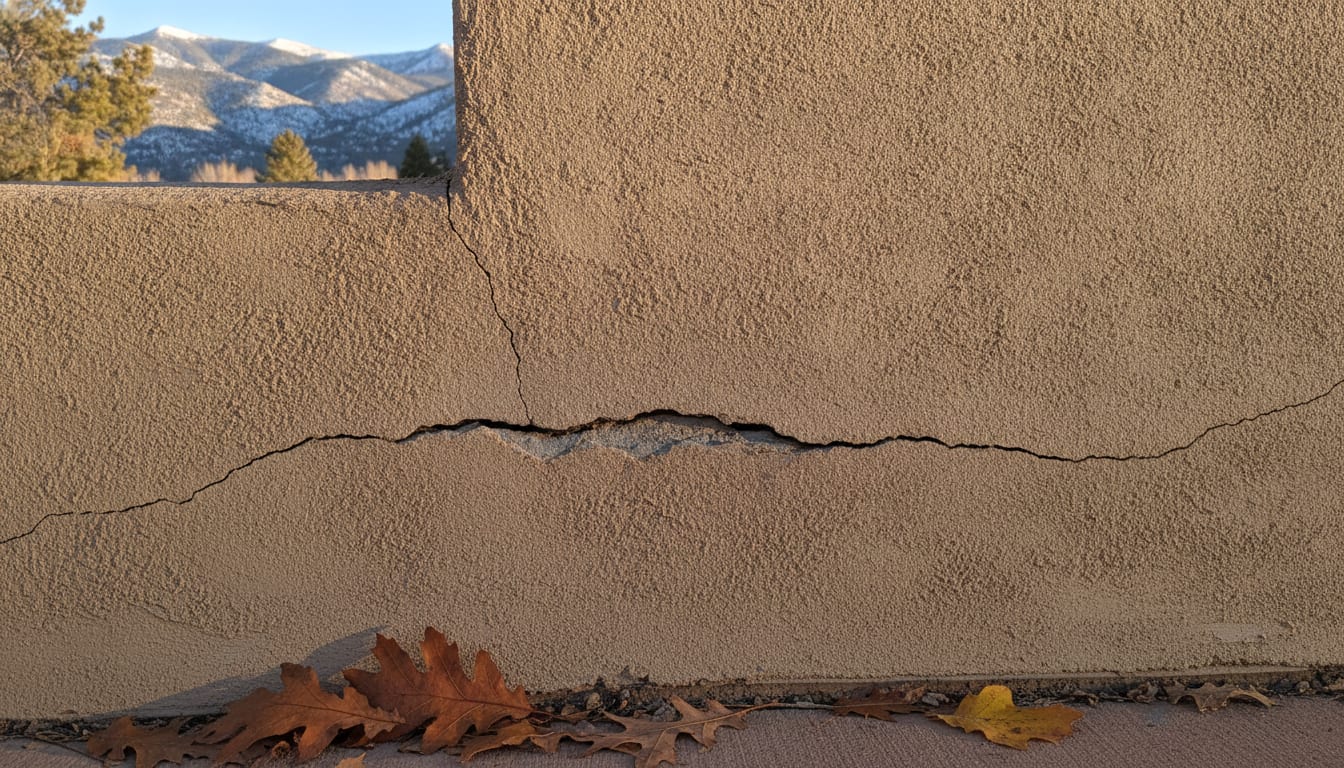
Not every stucco crack is the same. Here's how to tell hairline crazing from a water path before freeze-thaw widens it this fall.
Fall is the right time to walk your exterior and look hard at the stucco. Colorado Springs gets a freeze-thaw cycle every winter that takes small cracks and makes them bigger ones. Water gets into a crack on a warm afternoon, then the overnight low drops 30 to 40 degrees and that water freezes and expands. A hairline crack in October can be a quarter-inch gap by March. Catching it now, before the first hard freeze, is the whole game.
Not every crack needs the same response, though, and knowing the difference will save you from either ignoring something serious or paying to fix something that was never a problem.
Hairline Crazing: Normal and Coatable
Fine, spiderweb-like cracking across the surface of stucco is usually just shrinkage as the material cured, or minor surface movement over the years. If you run a fingernail across it and it doesn't catch, and there's no gap you could slide a piece of paper into, this is cosmetic. A good masonry or elastomeric coating, applied correctly, bridges this kind of crazing and sheds water. This is the easy case.
The Fingernail-Width Crack: A Water Path
If you can get a fingernail into a crack, or it's wide enough to see depth in it, that's not cosmetic anymore. That crack is a path for water into the wall assembly behind the stucco. Painting over it without repairing it first just seals the water in rather than out, which is worse than leaving it alone. These need to be routed out, filled with the right patching material, and matched in texture before anything gets coated. On homes across El Paso and Douglas County, this kind of crack often comes back in the same spot — that's usually expansive clay soil moving seasonally underneath the foundation, swelling when wet and shrinking when it dries out. A repair that doesn't account for that movement will just crack again next year.
Hollow Sound, Bulges, or Horizontal Cracks: Bond Failure
Tap the wall. If a patch of stucco sounds hollow compared to the area around it, or you see a horizontal crack or a bulge, the stucco has separated from what it's attached to. A face patch over a delaminated area won't hold — it's cosmetic work over a structural problem, and it'll fail again, often fast. This also matters because of a distinction a lot of homeowners don't know to ask about: traditional three-coat stucco and EIFS, or synthetic stucco over foam insulation board, look nearly identical from the driveway but repair completely differently. The knuckle test tells them apart — EIFS sounds distinctly hollow because there's foam behind it rather than a solid lath and scratch coat. Repairing one like the other is a common and expensive mistake.
One More Sign: White, Powdery Staining
If you see a chalky white residue on the stucco surface, especially near grade or around a penetration, that's efflorescence — mineral deposits left behind as water moves through the wall and evaporates out. It's a sign of moisture movement even if you can't find the crack that's letting it in.
Why This Is a Fall Job, Not a Spring One
Exterior coating work in Colorado Springs runs roughly April through October, so spring feels like the natural time to deal with stucco. But cracks don't wait for the weather to cooperate. A crack that goes into winter unrepaired will likely be worse by the time the season opens again, and a wider crack means more invasive repair, not just a quick patch. Walking the exterior in fall, before the first freeze, is simply catching the problem while it's still small.
This applies whether it's a single-family home in a post-1990s stucco subdivision, a commercial building, or an HOA community working through a capital improvement repaint. For apartment communities and condo associations, stucco cracking across several buildings is common enough that it's worth writing the repair scope into the same project as the exterior repaint, rather than letting it surface later as a change order once the painting crew is already on site.
A Happy Painting associate can look at your stucco, tell you which category your cracks fall into, and whether a coating is enough or whether repair comes first. That estimate is free and there's no obligation either way.
Frequently Asked Questions
Can I just paint over stucco cracks instead of repairing them?
It depends on the crack. Hairline crazing takes a coating fine. Anything wide enough to catch a fingernail, or that sounds hollow when tapped, needs repair first — coating over it just traps water against a wall that's already compromised.
How do I know if my stucco is traditional three-coat or EIFS?
Tap it. Traditional stucco over lath and a scratch coat sounds solid. EIFS, which is synthetic stucco over a foam insulation board, sounds distinctly hollow. The two repair completely differently, so it's worth knowing which one you have before anyone starts patching.
Why do my stucco cracks keep coming back in the same spot?
That's usually a movement crack rather than a surface one. Expansive clay soils across El Paso and Douglas County swell and shrink seasonally, and that movement shows up as a recurring crack in the stucco or drywall above it. It needs a repair detailed to move, not a third round of patching.