The Chalk Test: How Often to Repaint a House in Colorado
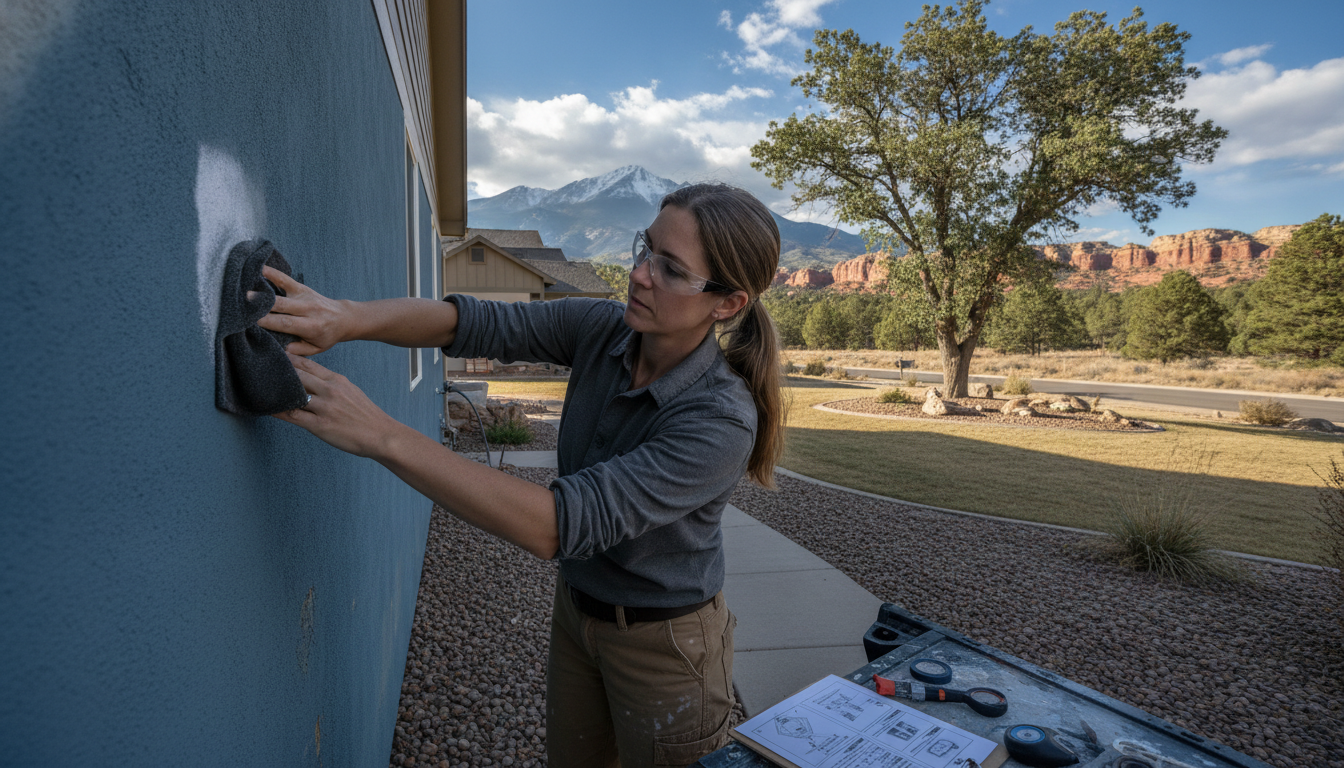
Late summer is the best time to check your sunniest wall. Learn the chalk test and how often to repaint a house in Colorado's high-UV climate.
Late summer, after a full season of Colorado sun, is the best time to walk around your house and actually look at it. The UV load has peaked, the paint has taken its hardest hit of the year, and whatever is going to show up on your south and west walls has usually shown up by now. Before the leaves turn and the exterior painting season winds down, it is worth five minutes with your hand against the wall.
Why Colorado Walls Age Faster
At 6,000 feet and above, UV exposure is materially higher than at sea level. Add a daily temperature swing of 30 to 40 degrees, hail that shows up most summers somewhere in El Paso County, and afternoon thunderstorms that soak a wall and then let it bake dry again, and you have a climate that is genuinely harder on exterior coatings than most of the country. South and west elevations take the worst of it. North and east walls on the same house can look years younger.
The Chalk Test
Here is the test itself. Rub your bare hand or a dark cloth firmly across the sunniest wall of your house, about waist height. If it comes away with a fine, powdery residue, the paint is chalking. That is the resin binder breaking down under UV exposure and releasing pigment as dust. A little chalking is normal aging. Heavy chalking means the coating has stopped protecting the substrate underneath and it is not going to hold a new coat of paint until that residue is washed off first.
This is not a cosmetic detail. A wall that is actively chalking will cause a new topcoat to fail early, because the new paint is bonding to loose powder rather than to sound material. Any exterior repaint here should start with a wash, not a brush.
What Else to Look For While You Are Out There
While you have your hand on the wall, check a few other things. Hairline crazing in stucco is normal and a good coating handles it. A crack you can get a fingernail into is a different story — it is a path for water, not a cosmetic flaw. Tap a patch or a repaired section; if it sounds hollow, the stucco has lost its bond to what is behind it, and paint will not fix that. On homes built from the late 1970s through the 1990s with composite hardboard siding, look at the bottom edge of the boards for softness or swelling — that is a known failure pattern in this housing stock, usually limited to one or two elevations rather than the whole house.
Also look at recurring drywall cracks in the same spots indoors. Around El Paso and Douglas County, expansive clay soils and very low humidity move framing enough to reopen a crack that has been filled more than once. That wants a repair detailed to accommodate movement, not a third round of compound.
So How Often Should You Repaint?
The honest answer is every 5 to 10 years, but that range is wide because exposure and substrate matter more than the calendar. A south-facing stucco wall in Fountain or Colorado Springs proper may need attention on the shorter end of that window. A shaded north wall in Woodland Park or higher-elevation Teller County can go longer. Pueblo, sitting lower and warmer, holds its exterior season longer in the fall but sees its own UV load in summer. The wall tells you more than the age of the paint job does.
Timing the Work Right
Exterior coatings need the surface above roughly 50°F for the entire cure, not just at application, which is why the working season here generally runs April through October. A warm afternoon followed by a freezing overnight low can ruin a coat that looked fine at five o'clock. Late summer and early fall, once the worst of the thunderstorm pattern has passed, is a good window for both the inspection and the work itself.
If your chalk test comes back dusty, or you see cracking, hollow patches or soft siding, painting over it will buy you a season at best. Whether it is a single-family home, a rental between tenants, a commercial building, or a whole apartment or HOA property due for a phased exterior repaint, the repair belongs in the same scope as the paint — not discovered halfway through as a change order.
Happy Painting Inc. has served Colorado Springs and the surrounding area for 13 years, and Josh Welp brings over 25 years in the painting trade, including years on the supply side specifying coatings for exactly this climate. A Happy Painting associate will take a look at your walls in person, tell you honestly what the chalk test and the cracks mean, and give you a free, no-obligation estimate.
Frequently Asked Questions
How do I know if my paint is chalking or just dirty?
Wipe the wall with a damp cloth first. Dirt and pollen rinse off and leave the surface looking normal underneath. Chalking leaves a fine, dry powder that keeps coming off no matter how much you wipe, because it is the coating itself breaking down, not surface grime sitting on top of it.
Does chalking mean I need to repaint right away?
Not necessarily right away, but it does mean the coating is no longer protecting the substrate the way it should, and it will need to be washed thoroughly before any new paint is applied. Light chalking on a wall that still looks even in color can often wait for the right season. Heavy chalking on a south or west wall is worth having looked at sooner.
Should I repaint every elevation of my house at the same time, or just the worst one?
It depends on how uneven the wear is. Many Colorado homes show real differences between elevations because the south and west walls carry so much more UV and heat cycling than the north and east sides. A Happy Painting associate can look at all four elevations and tell you honestly whether one side needs attention now or whether it makes sense to do the whole exterior together.