Traditional Stucco vs EIFS Repair: Colorado Springs Guide
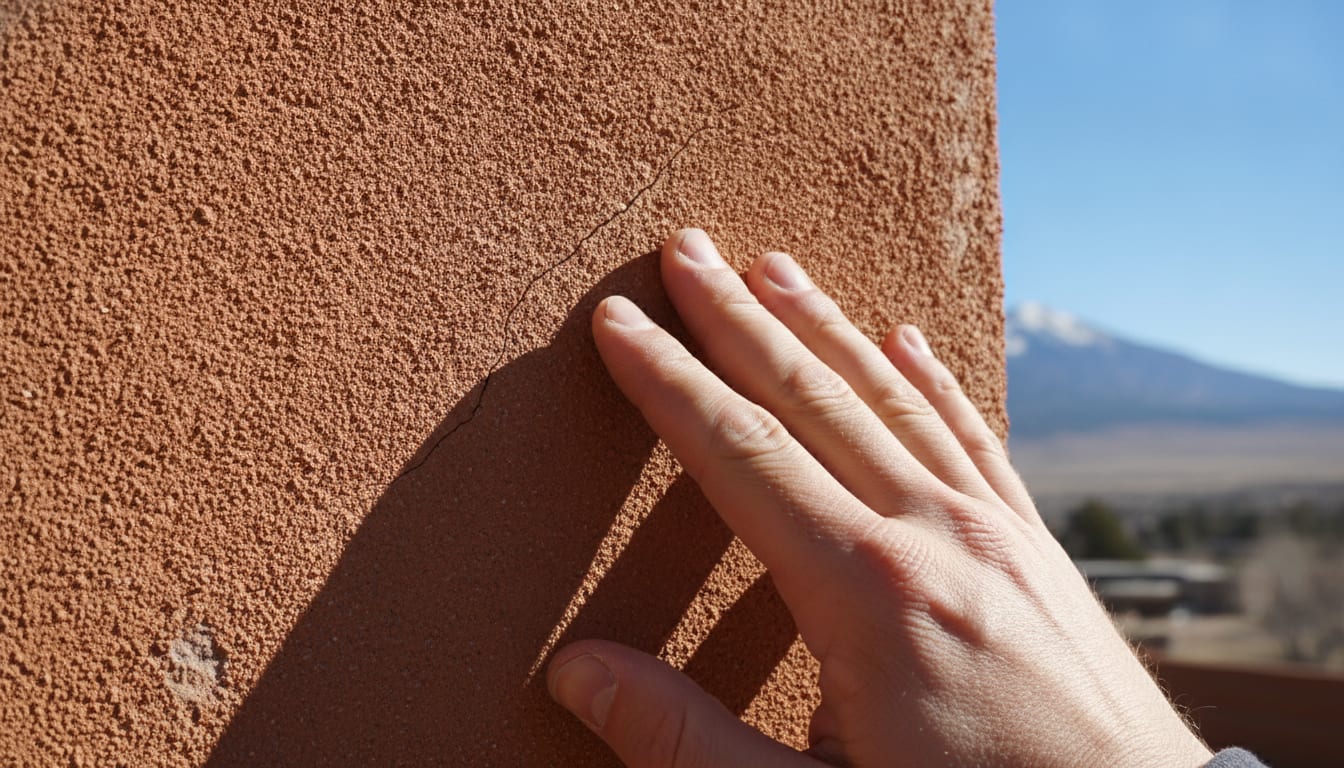
Traditional stucco and EIFS look alike but repair differently. Learn the knuckle test Colorado Springs homeowners can use before calling for repair.
Stucco is everywhere on Colorado Springs homes built since the early 1990s, and from the curb, two very different systems look identical. One is traditional three-coat stucco over a wire lath. The other is EIFS — exterior insulation and finish system, sometimes called synthetic stucco — a foam board with a thin textured coating on top. They take paint differently, they crack differently, and more to the point, they fail differently. Treating one like the other is a common reason a stucco repair doesn't hold.
The Knuckle Test: How to Tell Them Apart
You don't need a contractor's eye for this one. Make a fist and knock on the wall the way you'd knock on a door.
- Traditional three-coat stucco sounds solid and dense — like knocking on concrete, because underneath the finish coat, it essentially is cement over lath and sheathing.
- EIFS sounds hollow, almost like knocking on a wall with a gap behind the drywall. That's the foam insulation board underneath doing what foam does.
Tap in a few spots, especially near corners and under windows. If the sound changes from solid to hollow in the same wall, that's worth noting, too — it can mean a prior patch was done with the wrong material, or that bond has been lost in that one area.
Why the Repair Approach Is Completely Different
Traditional stucco is a rigid, cementitious skin. Cracks in it are usually a structural or moisture story — expansive clay soils across El Paso and Douglas County moving the foundation slightly, or water finding its way behind the coating. Repairing it right means cutting out the failed area down to the lath, patching in matching layers, and matching both the texture and the color before the new paint goes on. Done well, the patch disappears.
EIFS is a different animal entirely. Because the insulation board underneath has no structural role and very little tolerance for water, a crack in EIFS is often a sign that water has already gotten behind the foam. Patching the surface coating without addressing what's underneath just reseals the problem. EIFS repair also uses different base coats, different mesh, and different finish products than traditional stucco — using a traditional stucco patch mix on EIFS, or vice versa, is one of the more common reasons a repair bonds poorly and cracks again within a season or two.
Which Cracks Actually Matter
Not every crack is a problem, on either system. Fine hairline crazing — a spiderweb pattern you can barely see — is common and a good masonry or elastomeric coating will bridge it. But a few signs mean it's time for an actual look rather than just paint:
- A crack you can catch a fingernail in. That's a water path, not a cosmetic issue.
- Horizontal cracks or any bulging in the wall surface — a sign the stucco or EIFS has lost its bond to what's behind it.
- A hollow sound where the rest of the wall sounds solid (or the reverse on EIFS).
- White, powdery staining on the surface. That's efflorescence — mineral deposits left behind as water moves through the wall and evaporates out. It means moisture has an active path, not that it used to.
Why This Matters for Elastomeric Coatings
A high-build elastomeric coating is genuinely useful on the right wall — it bridges hairline cracking and sheds bulk water well. But it also slows how fast the wall can dry outward. On a wall that's already holding moisture behind it, whether from a failed EIFS joint or a stucco crack that's been a water path for a while, sealing the outside with a heavy elastomeric coat can trap that moisture rather than solve the problem. That's a judgment made on site, wall by wall, not something to default to because it's marketed as a crack-fix-all.
One Scope, Not a Change Order Later
Stucco repair in Colorado Springs, Monument, Black Forest, Falcon, Fountain and Pueblo all deal with the same two systems and the same freeze-thaw, high-UV conditions that stress them. Whether it's a single house or a multifamily exterior repaint across several buildings, the repair and the paint need to be scoped together from the start — not discovered mid-job and tacked on as an extra. That's especially true on HOA and apartment community exteriors, where a stucco survey across a whole property should turn into line items in the original scope, not surprises after the first building is already underway.
If you've got cracking, staining, or a hollow spot on a stucco or EIFS wall, a Happy Painting associate can take a look, run the knuckle test, and tell you honestly which system you've got and what it actually needs. The estimate is free and there's no obligation.
Frequently Asked Questions
How can I tell if my house has traditional stucco or EIFS?
Knock on the wall with your knuckles. Traditional three-coat stucco sounds solid and dense, almost like concrete. EIFS, which has a foam insulation board underneath, sounds hollow. Testing a few spots around the house, especially corners and areas under windows, gives the clearest picture.
Can a stucco crack be repaired with just paint?
It depends on the crack. Fine hairline crazing is normal and a good coating can bridge it. But a crack you can get a fingernail into, a hollow sound when tapped, or white powdery staining all mean there's an active water or bond problem, and painting over it just seals the issue in rather than fixing it.
Is EIFS repair different from traditional stucco repair?
Yes, completely. EIFS has a foam board underneath with little tolerance for moisture, so cracks there often mean water has already reached the foam. It also uses different base coats and mesh than traditional stucco. Using the wrong repair material on either system is a common reason a patch fails again within a season or two.