White Staining on Stucco: What Efflorescence Means (Colorado Springs)
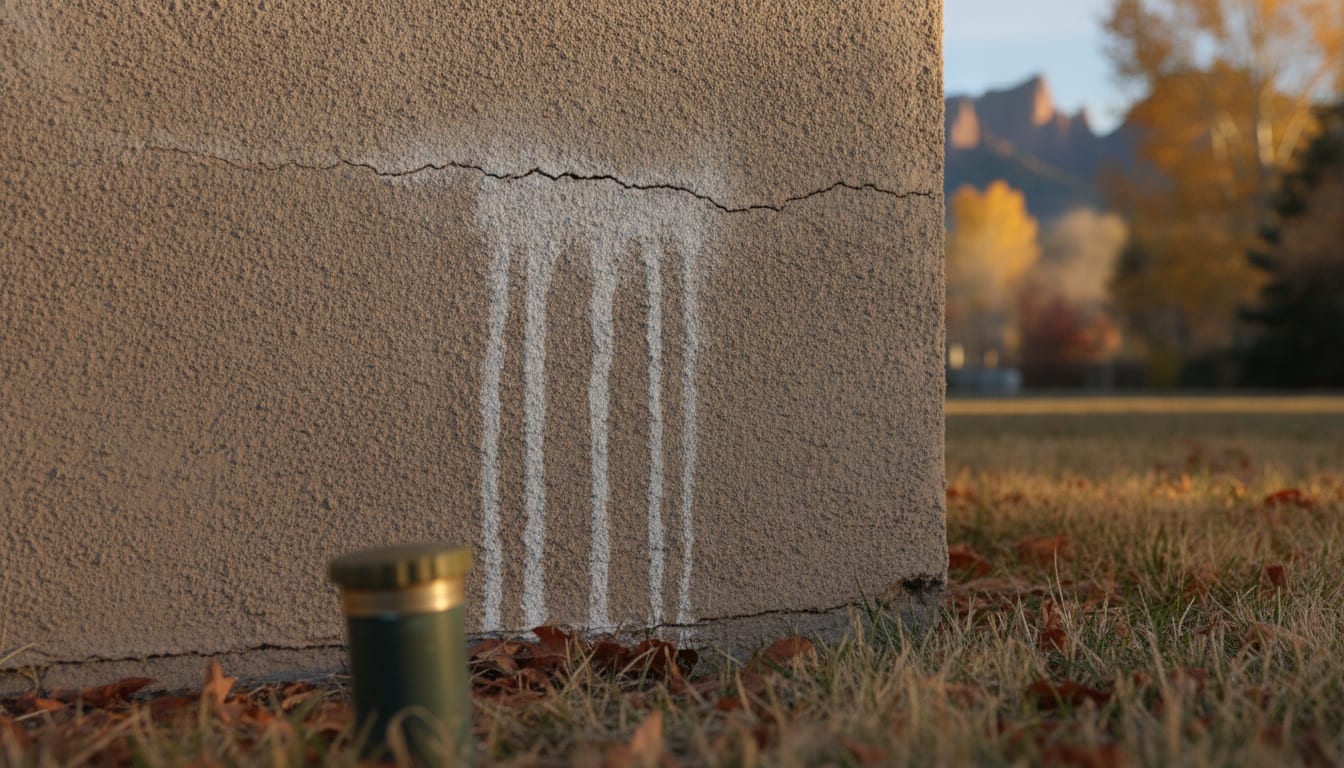
White powdery stucco staining means water is moving through the wall. Learn why fall is when it shows up clearest and what stucco repair Colorado Springs needs.
If you've noticed a chalky white film on your stucco that wipes off like dust but keeps coming back, you're looking at efflorescence. It's one of the clearer warning signs a wall gives you, and fall is often when it becomes easiest to read.
What Efflorescence Actually Is
Efflorescence is mineral salt left behind after water moves through masonry or stucco and evaporates at the surface. The water dissolves salts inside the stucco or the substrate behind it, carries them to the face of the wall, and leaves them there as a white, powdery residue once it evaporates. The staining itself isn't the problem. It's a symptom. The real issue is that water is finding a path through the wall in the first place, and it's going to keep doing that until something changes.
Why Fall Makes the Pattern Clearer
Through summer, irrigation systems and monsoon storms keep a lot of walls intermittently damp, and staining can look scattered or inconsistent. Once irrigation gets shut down for the season and the heavy summer moisture tapers off, a wall that's still showing white staining is telling you something more specific: the water source isn't the sprinklers. It's coming from somewhere else — a flashing detail, a crack, a parapet, a planter box against the foundation, or capillary draw from the ground. Fall is a good time to actually walk the exterior of a home or property and see which walls are still staining after the easy explanations are gone.
Which Cracks Are Letting Water In
Not every crack is the culprit, and this is where it matters to look closely rather than guess. Fine hairline crazing spread across a wall is normal and usually just needs the right coating. A crack you can catch a fingernail in is a different story — that's a water path, and coating over it without addressing it just seals the moisture in rather than out. Horizontal cracking, bulging, or a hollow sound when you tap the surface means the stucco has lost its bond to what's behind it, and a cosmetic patch won't fix that. A Happy Painting associate can look at the pattern and tell you which kind you're dealing with — that part of the visit is free.
Traditional Stucco vs. EIFS
Traditional three-coat stucco and EIFS (synthetic stucco over a foam substrate) look almost identical from the street, but they fail differently and repair differently. A simple knuckle test tells them apart — EIFS sounds hollow. Getting this wrong before a repair means the fix doesn't match the actual wall assembly.
What This Means for a Repaint
Painting over active efflorescence without addressing the water source is a short-term fix at best. The staining will usually return, and depending on the wall, the moisture can keep doing damage behind the coating. A masonry or elastomeric coating can be the right call on stucco — it bridges hairline cracking and sheds water well — but on a wall that's already holding moisture, a high-build coating can trap it in rather than let it dry outward. That's a judgment made on site, wall by wall, not a default answer.
Expansive Soils and Why This Is Common Here
El Paso and Douglas County sit on expansive clay soils that swell when wet and shrink when dry. That movement stresses stucco and drywall alike, which is part of why recurring cracks are so common locally, and why a crack that's been patched more than once usually needs a repair detailed to accommodate movement rather than another round of filler.
How Happy Painting Approaches It
Josh Welp has over 25 years in the painting trade, including years on the supply side specifying coatings for exactly these situations. Happy Painting writes stucco, siding and trim repairs into the same scope as the paint job, rather than discovering them mid-project and handling them as a change order later. That applies whether it's a single-family home, a commercial building, or a phased repaint across an apartment community or HOA property. If you manage a multifamily property and you're seeing this on more than one building, it's worth a conversation — Josh has run a multifamily contract worth $145,000 across two years and treats these as phased capital improvement projects from the start.
If you're seeing white staining on stucco anywhere from Monument to Fountain to Pueblo, it's worth having someone look at it before deciding whether it needs a crack repair, a bond-loss patch, or just the right coating. Estimates are free and done on site, with no obligation.
Frequently Asked Questions
Is efflorescence dangerous or just cosmetic?
It's a sign of moisture movement, not just a cosmetic stain. The staining itself won't hurt the wall, but the water causing it can damage the stucco, framing or drywall behind it over time if the source isn't addressed.
Will a coating stop efflorescence from coming back?
It depends on the cause. If the water source is fixed first, the right coating can help manage future moisture. If you coat over an active leak path without finding the source, the staining and the underlying damage usually continue.
Can I just wash the staining off myself?
Washing removes the surface salts temporarily, but if water is still moving through the wall, it will return. It's worth having someone look at where the water is actually coming from before treating the surface.